
5 Major Learning Points on Fragility Fracture
Fragility fracture is not just an accident. A fracture after a minor fall, especially after the age of 50, is often a warning sign of underlying osteoporosis or poor bone quality.
- One fracture predicts the next fracture
A low-trauma fracture should be treated as a “bone attack.” The first fracture is a major opportunity to prevent the second. - Early evaluation can change the future
After a fragility fracture, patients need bone health assessment: DXA/BMD, calcium, vitamin D, thyroid profile, renal function, PTH when needed, and review of medications such as steroids. - Bone strength is more than BMD
Fracture risk depends on bone density, bone quality, muscle strength, balance, vision, falls risk, diabetes, thyroid disease, menopause, ageing and frailty. - Treatment must be comprehensive
Management includes calcium and vitamin D correction, adequate protein, strength and balance training, fall prevention, and osteoporosis medicines when indicated. - Fracture Liaison Service is the missing link
The Salem experience reinforces that every fragility fracture should trigger a system pathway: Identify → Investigate → Initiate → Integrate → Follow-up.
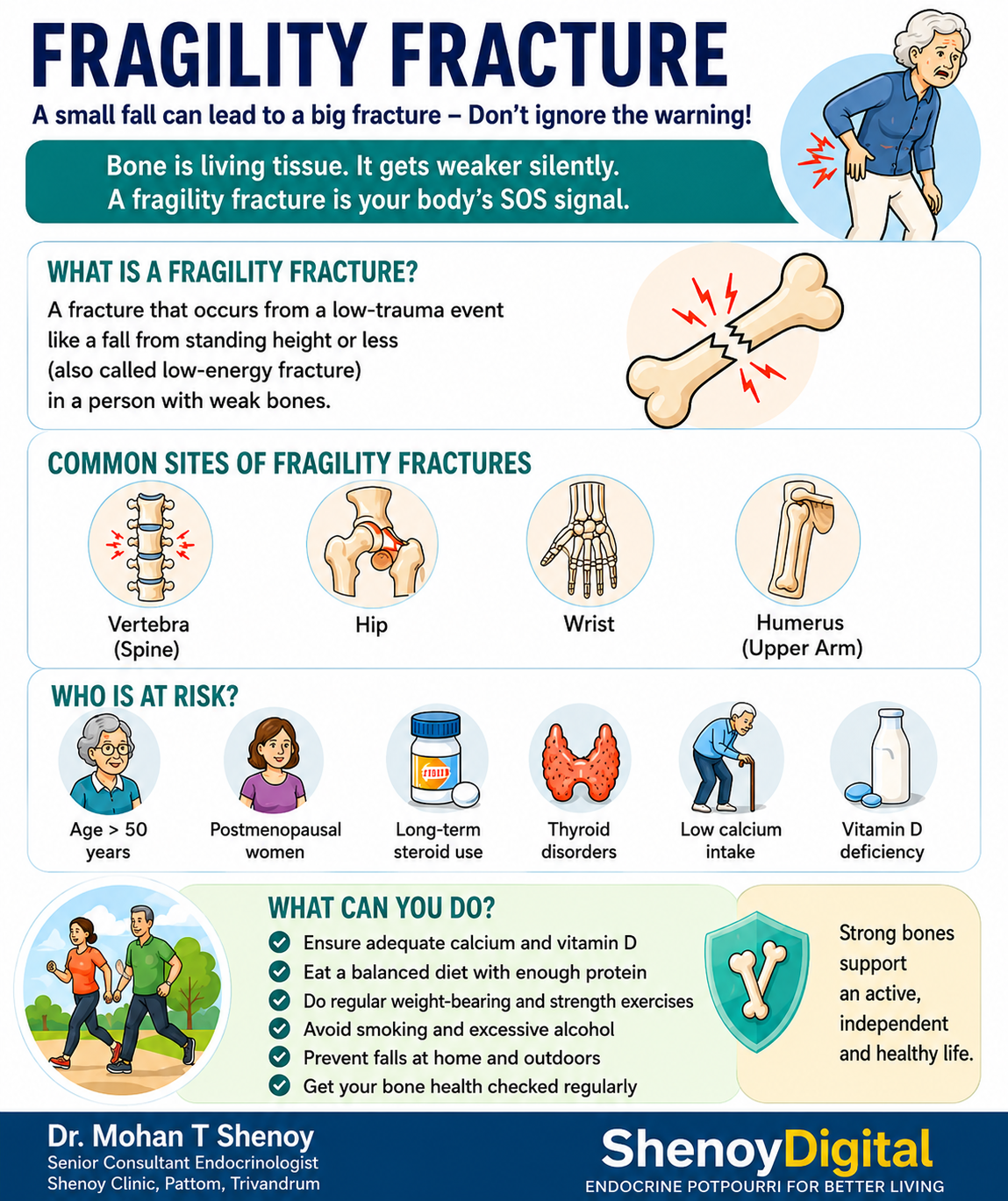
Patient message: A small fall causing a big fracture is not normal ageing. It is a warning signal. Timely bone evaluation and treatment can prevent future fractures.